The Japanese keyword hack represents one of the most sophisticated SEO poisoning threats facing WordPress users today. It is notoriously difficult to detect and even harder to remediate because it targets your search engine reputation rather than just your server files.
Unlike standard malware that might crash a site, this attack uses cloaking techniques to remain invisible to administrators. While you see your normal homepage, the hack feeds malicious content (such as Japanese gambling, pharmaceutical, or adult advertisements) directly to search engine crawlers. Many site owners only discover the breach when they notice their domain ranking for thousands of irrelevant, high risk keywords.
Why Traditional Security Tools Miss the Breach
The primary challenge with this specific attack is that most security solutions are not designed to identify cloaked SEO poisoning.
WordPress plugins typically focus on scanning server side files. They often miss injected spam pages that are generated dynamically or only served to specific external visitors.
Hosting level tools examine the site from inside the server environment. They lack the external perspective needed to see what a visitor from a different network might experience.
Standard scanners usually crawl from a single location using a consistent user agent. Sophisticated hackers recognize these patterns and serve clean content to those specific IP addresses to avoid detection.
The result is a dangerous blind spot: your website appears healthy to you, but Googlebot or a user in another country sees a completely compromised version.
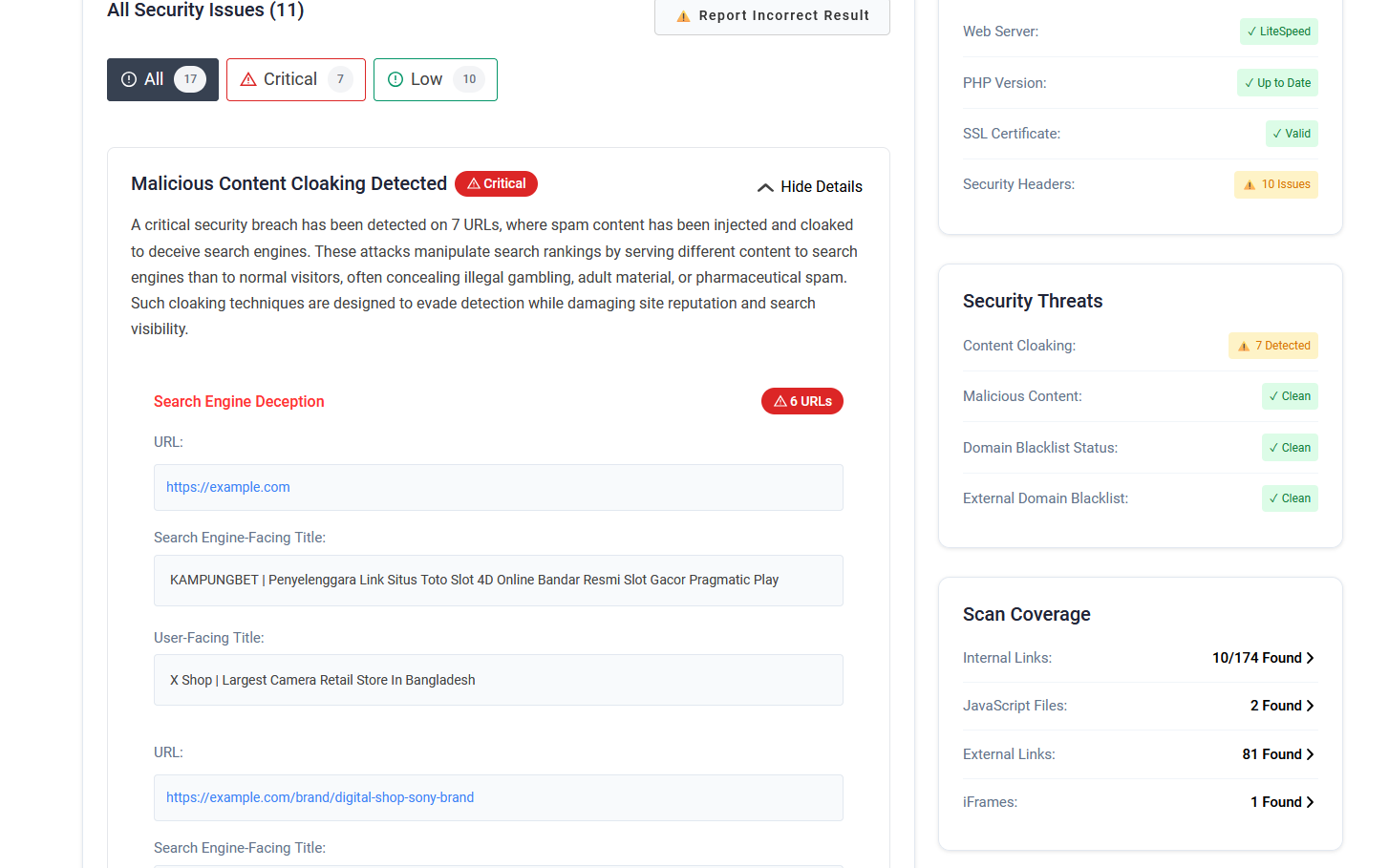
How SecureWP Identifies Hidden SEO Threats
The SecureWP Security Checker was engineered specifically to solve the problem of visibility. Rather than relying solely on internal file checks, it audits your website from the perspective of global search engines and external visitors.
Key features that differentiate this approach include:
- Multi-location scanning: Analyze how your website renders in different geographic regions to bypass regional cloaking.
- Search engine simulation: Verify exactly what Google and Bing are indexing to spot discrepancies.
- User agent variation: Detect hidden content served exclusively to specific browsers or search bots.
- Spam keyword detection: Identify injected Japanese characters, pharmaceutical links, and hidden redirects instantly.
By comparing the administrative view with the crawlable view, SecureWP exposes the cloaking layers that traditional plugins ignore.
The High Cost of Delayed Detection
Time is the most critical factor when dealing with SEO poisoning. The longer these malicious pages exist on your domain, the more severe the consequences:
- Your search rankings may vanish as Google applies manual or algorithmic penalties.
- Your domain authority and brand trust can plummet overnight.
- Security warnings in search results drive legitimate traffic away from your site.
- In extreme cases, your entire domain can be deindexed and blacklisted.
Recovering from a penalty can take months of technical cleanup and re-indexing requests. Identifying the breach early through external scanning is the only way to protect your digital assets before the damage becomes permanent.
Protect Your Site With External Intelligence
SEO poisoning and cloaking are specifically designed to circumvent standard security protocols. Relying on internal checks alone leaves your most valuable asset (your search reputation) at risk.
The SecureWP Security Checker provides the objective, external perspective required to maintain a secure environment. By performing regular external scans, you ensure that what search engines see aligns perfectly with what you intended to publish.


